The Masaniello Betting System: A Complete Guide to Staking and Bankroll Management
By The Masaniello Team · August 25, 2026
What Is the Masaniello Betting System?
The Masaniello staking systemsizes each bet as a percentage of your current bankroll instead of a fixed amount. Win, and the next stake grows with your bankroll. Lose, and it shrinks. The stake always tracks the bankroll's current size, updated after every result.
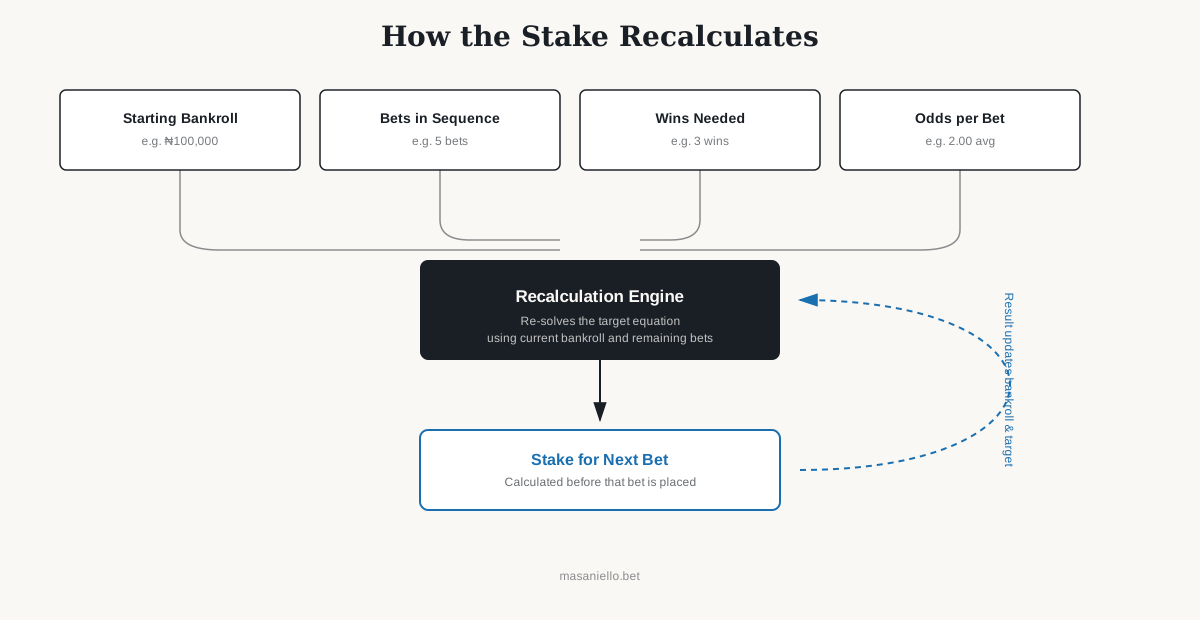
The method runs on four inputs: starting bankroll, number of bets planned for the sequence, number of those bets you expect to win, and the average odds across them. Feed those four numbers in and it returns the exact stake for every bet in the sequence, calculated in full before you place the first one.
Bettors use it to run a series of picks as one connected unit rather than as separate, unrelated wagers. A five-bet sequence and a twenty-bet sequence both work the same way: the system solves for the stake needed at each step to reach the target if the expected win rate holds, and to limit the damage if it doesn't.
It has nothing to say about which team wins. It answers one question: how much of the bankroll a given bet should carry, given everything that's happened in the sequence so far.
Where the Masaniello System Comes From
The system was developed in 2002 by Ciro Masaniello and Massimo Mondò, built originally as an Excel-based staking model for roulette. The core idea, sizing each wager against a bankroll that grows or shrinks rather than against a fixed unit, predates any specific sport. It was designed for any sequence of independent events with known odds, which is why it moved from casino tables into sports betting without needing to change the underlying math.
The name comes from Masaniello, one of the two creators, not from the 17th-century Neapolitan revolutionary some betting sites attribute it to. That attribution shows up repeatedly in English-language betting content and isn't supported by the original source material, which credits the two Italian developers directly.
Since then, the model itself has stayed largely unchanged. What's changed is the tooling around it, from a manually updated spreadsheet to calculators that recompute the stake automatically after every result.
How the Masaniello System Actually Works
The system tracks two numbers as the sequence runs: bets remaining and wins still needed to hit the target. Each stake is calculated so that if you hit the target number of wins in the target number of bets, the sequence ends at a defined profit, and if you fall short, the loss stays inside the bankroll allocated to that cycle from the start.
The odds on each bet factor directly into the stake. Higher odds mean a smaller stake can still contribute the same amount toward the profit target, so the system sizes down. Lower odds require a larger stake to make the same contribution, so the system sizes up. This is recalculated at every step, using the odds entered for the bet actually being placed at that point in the sequence.
A win recalculates the stake upward for the next bet, since fewer wins are now needed from a bankroll that just grew, which can support a bigger bet. A loss recalculates it downward, since more of the remaining bets now need to land, and the system pulls back to protect what's left. Both adjustments come from re-solving the same target equation the cycle started with, using the current bankroll and the current number of bets and wins remaining as the new inputs.
This is what separates it from flat betting, where every stake stays the same size regardless of what came before in the sequence. It's also what separates it from fixed-progression systems like Martingale, where the next stake follows a preset rule rather than a recalculation of the actual bankroll and target. The Masaniello system recomputes the full stake schedule from scratch after every single result.
Putting the System to Work
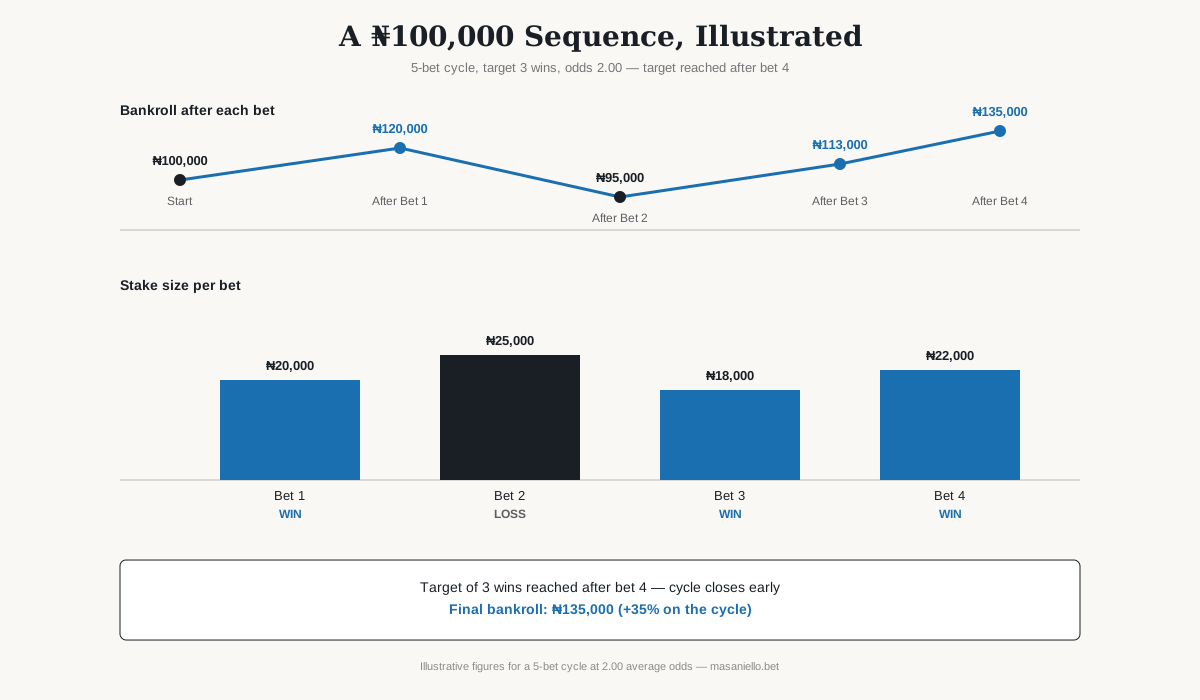
Start with a bankroll of ₦100,000, a sequence of 5 bets, a target of 3 wins, and average odds of 2.00 across the sequence. Enter those four numbers into the calculator and it returns a stake for bet 1 before anything has happened, sized to move the sequence toward 3 wins across 5 bets without risking more of the bankroll than that plan allows.
Bet 1 wins. The bankroll grows by the profit from that stake, and the target drops to 2 wins from the remaining 4 bets. The calculator recalculates and returns a larger stake for bet 2, since fewer wins are now needed and the bankroll can support more risk.
Bet 2 loses. The bankroll shrinks by that stake, and the target stays at 2 wins, now from only 3 remaining bets, a tighter requirement than before. The calculator returns a smaller stake for bet 3, protecting what's left of the bankroll while the sequence still has a path to target.
Bet 3 wins. One win is still needed, from 2 bets remaining. The stake for bet 4 rises again, sized against the new bankroll and the narrower target.
Bet 4 wins. The target is already met: 3 wins from the bets played so far. At this point the cycle can close, either manually or automatically if a target multiple was set in advance, and bet 5 in the original plan never needs to be placed.
Across four bets instead of five, the sequence reached its target early. The final bankroll reflects three wins and one loss sized against a constantly updating base rather than a fixed ₦100,000 stake repeated four times. That gap between the two outcomes is the entire function of the system.
Masaniello vs. Martingale, Flat Betting, and Kelly
Masaniello vs. Martingale
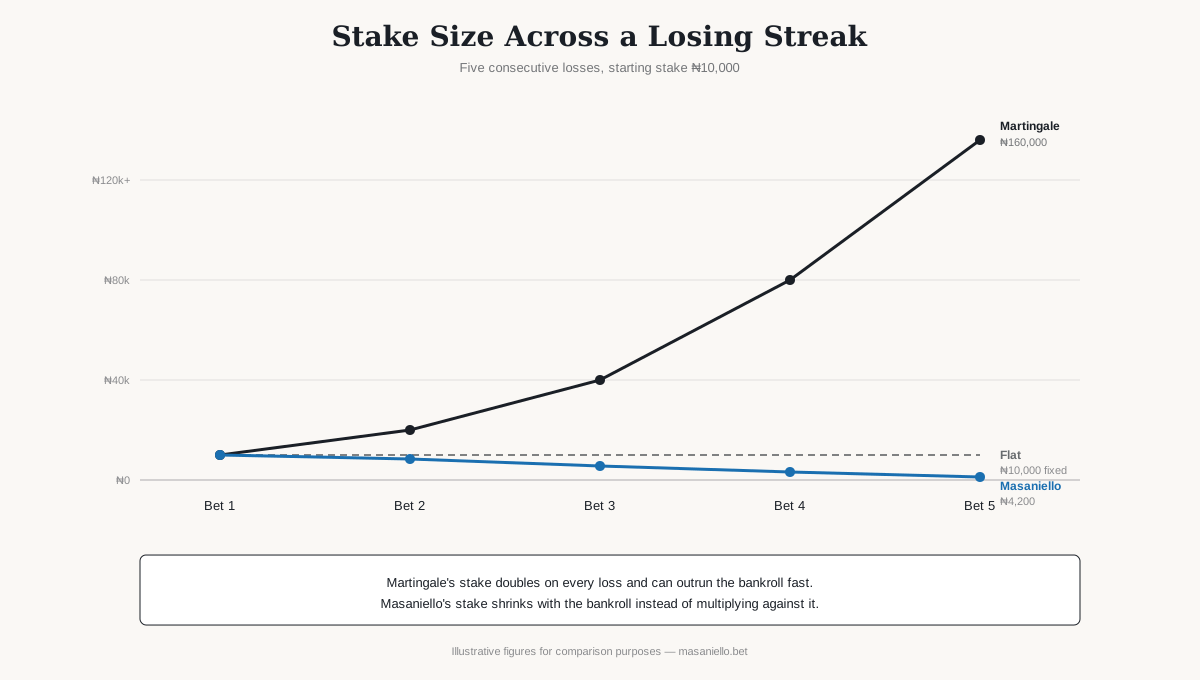
Martingale doubles the stake after every loss, on the assumption that one win eventually recovers everything lost before it. The stake is set by a fixed rule and ignores the actual bankroll behind it, so a long losing run can push the required stake past what the bankroll can cover well before a win arrives to recover it. Masaniello recalculates from the bankroll and the remaining target after every result, so the stake stays tied to what's actually available rather than to a multiplier that keeps doubling regardless of bankroll size.
Masaniello vs. Flat Betting
Flat betting risks the same stake on every bet, regardless of what happened on the ones before it. It's simple to run and it caps the risk on any single bet, but it treats a bankroll that's grown after a winning streak the same as one that's shrunk after a losing one. Masaniello adjusts every stake to the bankroll's current state, so four wins in a row and four losses in a row produce very different stake sizes for bet five, even though flat betting would size that bet identically either way.
Masaniello vs. Kelly
The Kelly criterion sizes each bet from your estimated edge and the odds on that one bet, aiming to maximize long-run bankroll growth across many independent wagers over time. Masaniello sizes each bet from a fixed sequence length and a target number of wins across that sequence, aiming to hit a defined outcome within a defined set of bets. Kelly optimizes one bet at a time, with no fixed endpoint. Masaniello solves for a whole sequence at once, with a target and an endpoint built into the calculation from the start.
Risks and Limitations
The system doesn't create an edge.It doesn't improve the odds of picking winners. What it controls is how much of the bankroll each bet carries as the sequence runs. If the win rate assumed at the start of the sequence doesn't hold in practice, the sequence can still end in a loss, and staking discipline on its own won't offset a run of bad picks.
The calculation depends on the accuracy of its inputs. An odds figure that's off, or a win target set higher than what the actual pick quality supports, produces a stake schedule that looks precise but is built on a wrong assumption from the first bet onward. The math only holds as well as the four numbers going into it.
Sequence length matters too. A short sequence with a high win target is more sensitive to a single unlucky result than a longer sequence with a more conservative target, since there's less room in a short sequence to recover from an early loss. Choosing the number of bets and the win target is itself a judgment call that shapes how forgiving or how aggressive a given cycle turns out to be.
There's also a practical constraint worth naming directly. Because stakes shrink after losses, a long losing run inside a sequence can push individual bet sizes down to amounts that are awkward to place, or that fall under a bookmaker's minimum stake. That's a practical edge case worth planning around when setting up a cycle, rather than something that only shows up after it happens.
The system does one job: controlling bankroll exposure across a connected sequence of bets. Picking the bets themselves is a separate job, done before the sequence starts and repeated at every step within it, and both jobs have to be done well for the sequence to end in profit.
How to Apply the Masaniello System With the Calculator
Set up a cycle by entering the starting bankroll, the number of bets planned for the sequence, how many of those are expected to win, and the odds being worked with. The calculator returns the stake for bet 1 immediately, calculated against those four numbers before any bet is placed.
After each bet settles, enter the result. The calculator recalculates the bankroll, the remaining target, and the next stake automatically, using the same math described above, without the sequence needing to be redone by hand. A cycle can be closed manually at any point once its target is met, or set to close automatically at a chosen target multiple, so the sequence doesn't run past the outcome it was actually built to reach.
Shorter cycles work well for testing a specific run of fixtures, such as a single midweek round. Longer cycles spread the target across more bets, which softens the impact of any one result but takes longer to resolve. The right length depends on how many picks are being made in the period being planned for, and how much variance is acceptable within it.
Every cycle stays saved, so a sequence started today can be picked back up later without losing track of where the bankroll and target currently stand. That matters most across sequences that span several days or several rounds of fixtures, where recalculating everything by hand each time would introduce exactly the kind of error the system is built to remove. See how the calculator works for the full mechanics behind every cycle.
The calculator removes the arithmetic. The judgment on which bets go into the sequence, and how long that sequence should run, stays with the person placing them.
Key Takeaways
- Stakes are sized as a percentage of the current bankroll, recalculated after every result, not fixed in advance.
- Odds, bets remaining, and wins still needed all factor into every stake the system returns.
- The system controls bankroll exposure only. It has no effect on pick quality, and a wrong win-rate assumption can still end a sequence in a loss.
- Cycle length and win target are judgment calls that shape how forgiving or aggressive a given sequence turns out to be.
Run these numbers against a real bankroll with the Masaniello calculator, sized to whatever sequence is actually being planned.